
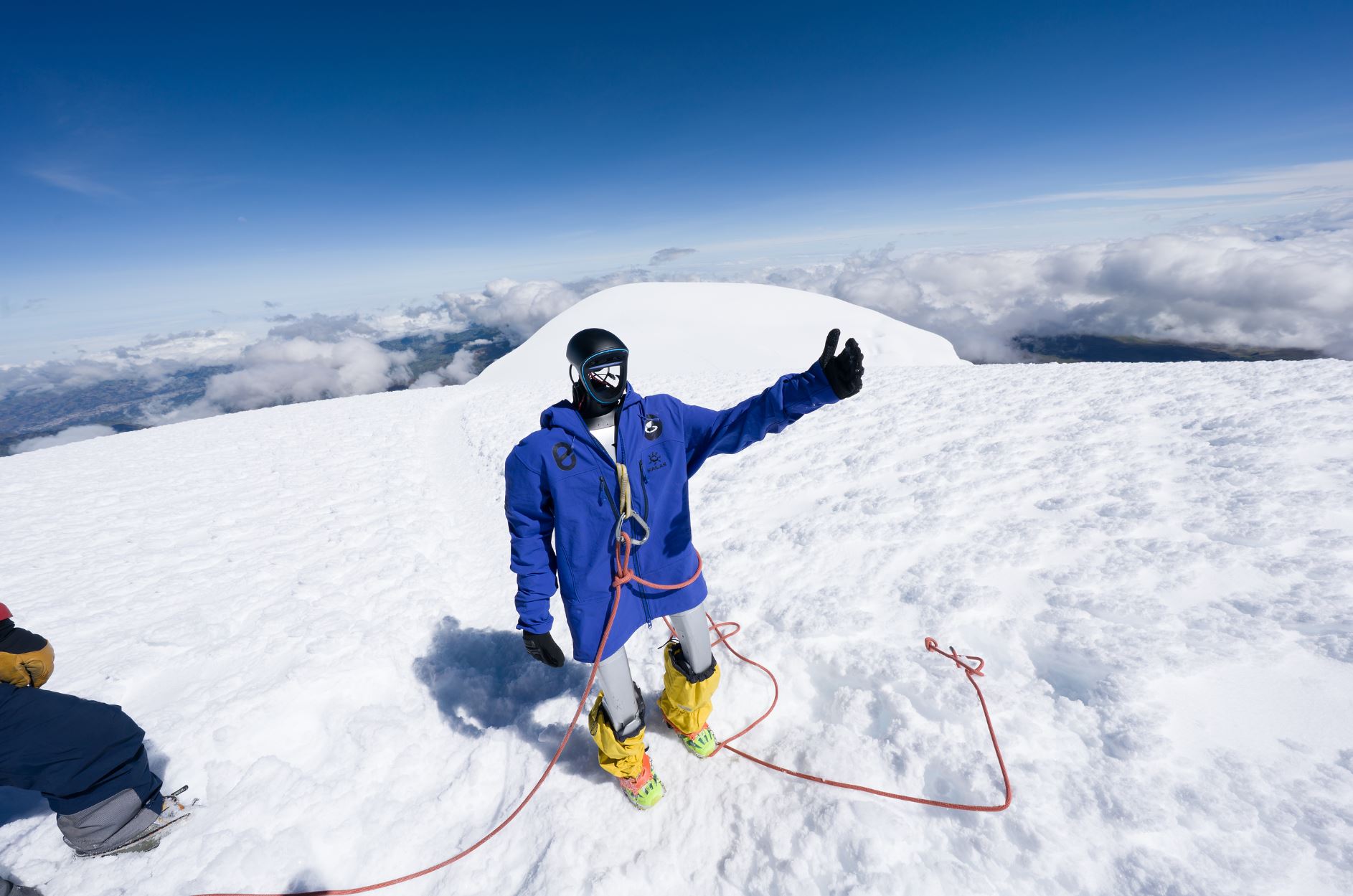
On June 5, a modified Unitree G1 humanoid named Pemba reached the summit of Ecuador’s Chimborazo volcano — 6,200 meters up, and, measured from the center of the Earth, the most distant point on the planet’s surface. Against the usual stream of videos of robots dancing and doing backflips, this one stands apart: the robot wasn’t sent into the mountains for a flashy clip, but to test what it can actually do where it’s hard and dangerous for a human to work.
How it went
First, the important detail the project team states openly itself. The climb took 16 hours, and it was only partly autonomous: the robot walked on its own only on gentle sections with slopes under 30 degrees, while on the steep and technical stretches it was carried by the expedition team. So this isn’t “a robot conquered the peak alone” — it’s more of a field test with a dramatic finish: a check of how the machine handles altitude, cold, and real terrain.
And the conditions were real, not lab-grade: down to −15 °C, wind gusts up to 90 km/h. To let the G1 survive it, engineers fitted it with custom cold-weather jackets and a ventilation system to manage heat. The robot’s autonomy, according to its developers, was trained in NVIDIA’s Isaac Sim, building on earlier cold-weather testing of the G1 in China’s Altay region, where it operated at −47 °C.
What’s it actually for?
This is the heart of it, and the reason the whole thing was done. Behind the project is engineer Pablo Berlanga (ex-Microsoft, WWF, Max Planck) and his team, Geologic Dome. Their idea is to turn a walking robot into a “camera on legs”: an autonomous platform with AI, sensors, Starlink satellite connectivity, and solar power that could work for months in hard-to-reach places.
The goals are down-to-earth and useful: monitoring wildlife and glaciers, collecting environmental data, supporting search-and-rescue operations, even clearing rubbish off popular peaks. The logic is simple — today all of this depends on people physically reaching the planet’s most dangerous spots, or on networks of stationary cameras. A robot that can get there itself and work there takes that risk off the human.
Chimborazo is only the first leg of a “Triple Crown”: next the team is eyeing Mauna Kea and, eventually, Everest. Though Everest runs into red tape rather than engineering — Nepal simply has no rules under which a robot could officially be allowed on the mountain.
Why it’s interesting
This story is another example of something I’ve been writing about lately: robots stepping out of the lab into the real, awkward world. If AGIBOT’s dataset gathers data on how robots handle (and fail at) everyday tasks, Pemba tests the same idea in an extreme setting — cold, altitude, and real terrain.
And the value here isn’t the photo of a robot on a summit, however striking it looks. The value is in answering a still-open question: can humanoid machines do useful work where it’s too dangerous for a person? Pemba hasn’t answered that yet — but it has honestly shown where today’s line runs: the robot takes the gentle slope on its own, and on the steep one it’s still carried by hand.
Based on Humanoids Daily, Explorersweb, Interesting Engineering, and statements from the Geologic Dome project team. Photo: David Gutierrez Cisneros, prnewswire.com