
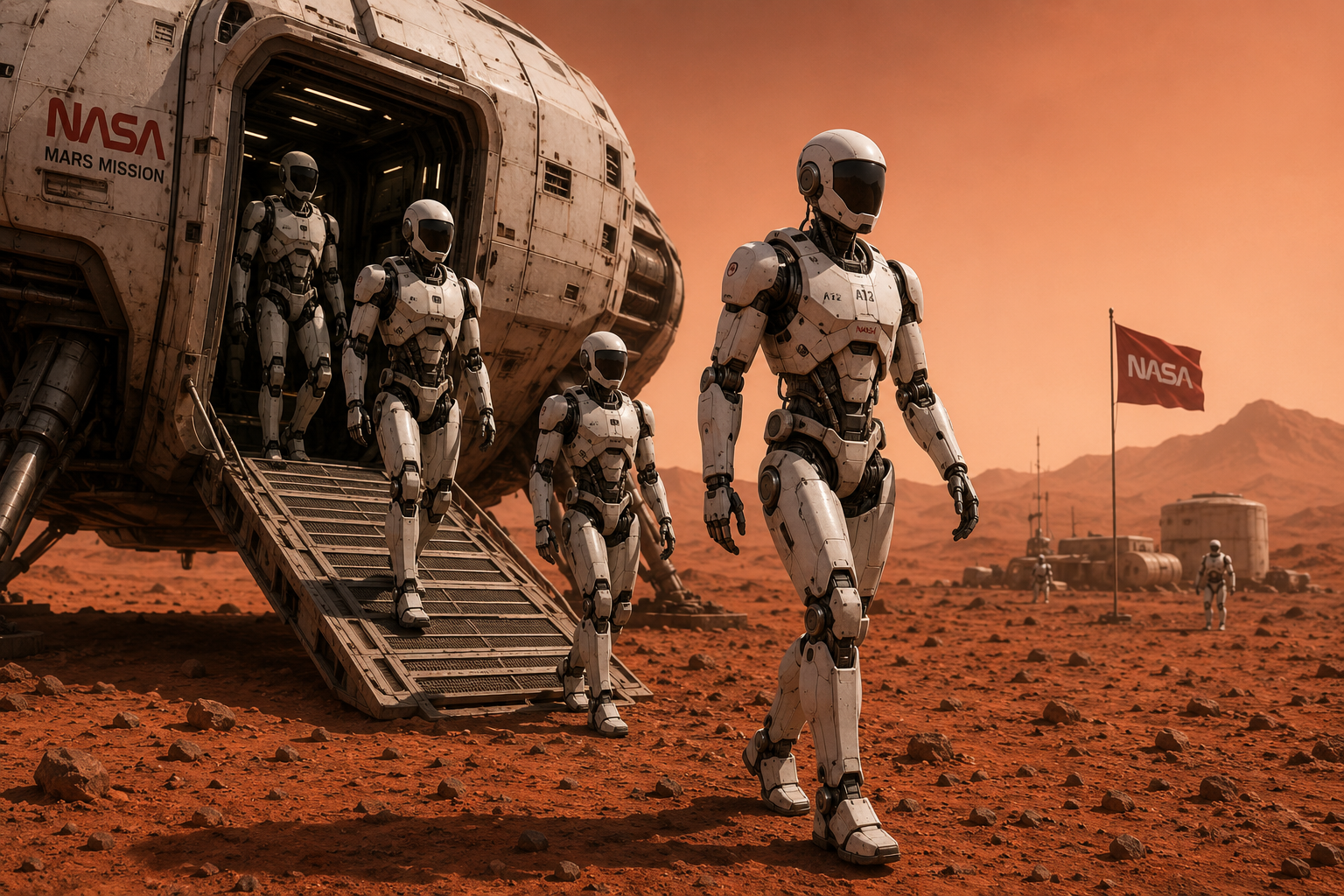
SpaceX has just test-launched Starship V3 — the largest rocket in history. 124 meters tall, nearly 8,000 tons of thrust, designed to carry up to 100 tons of cargo to Mars in a single trip.
The challenge: getting to Mars is becoming realistic, getting back is not. Lifting a rocket off the Martian surface requires fuel that doesn’t exist there yet. SpaceX’s plan is to produce methane on Mars from local water and CO₂ — but someone has to build those fuel plants first.
The connection most people miss: the man behind Starship is the same man behind Tesla Optimus. Elon Musk has openly stated that Optimus is designed with Mars in mind — a humanoid workforce that could be deployed on the surface before human crews arrive. SpaceX builds the transport, Tesla builds the labor force. Both converge on the same goal.
But Musk isn’t alone in this thinking. NASA has been preparing humanoid robots for Mars for over a decade. Its Valkyrie robot spent ten years at the University of Edinburgh researching autonomous walking and manipulation for pre-deployment duties on the Martian surface, and returned to Johnson Space Center in March 2026. NASA is also partnering with Apptronik to adapt its commercial Apollo humanoid for space operations — maintenance, logistics, and hazardous tasks.
Mars colonization may begin not with astronauts, but with humanoid robots building infrastructure and producing fuel. The question is whose robots get there first.